Overview
Our representative presented a technical session at CODE BLUE 2026, an international cybersecurity conference held in Tokyo on November 17 and 18, 2026.
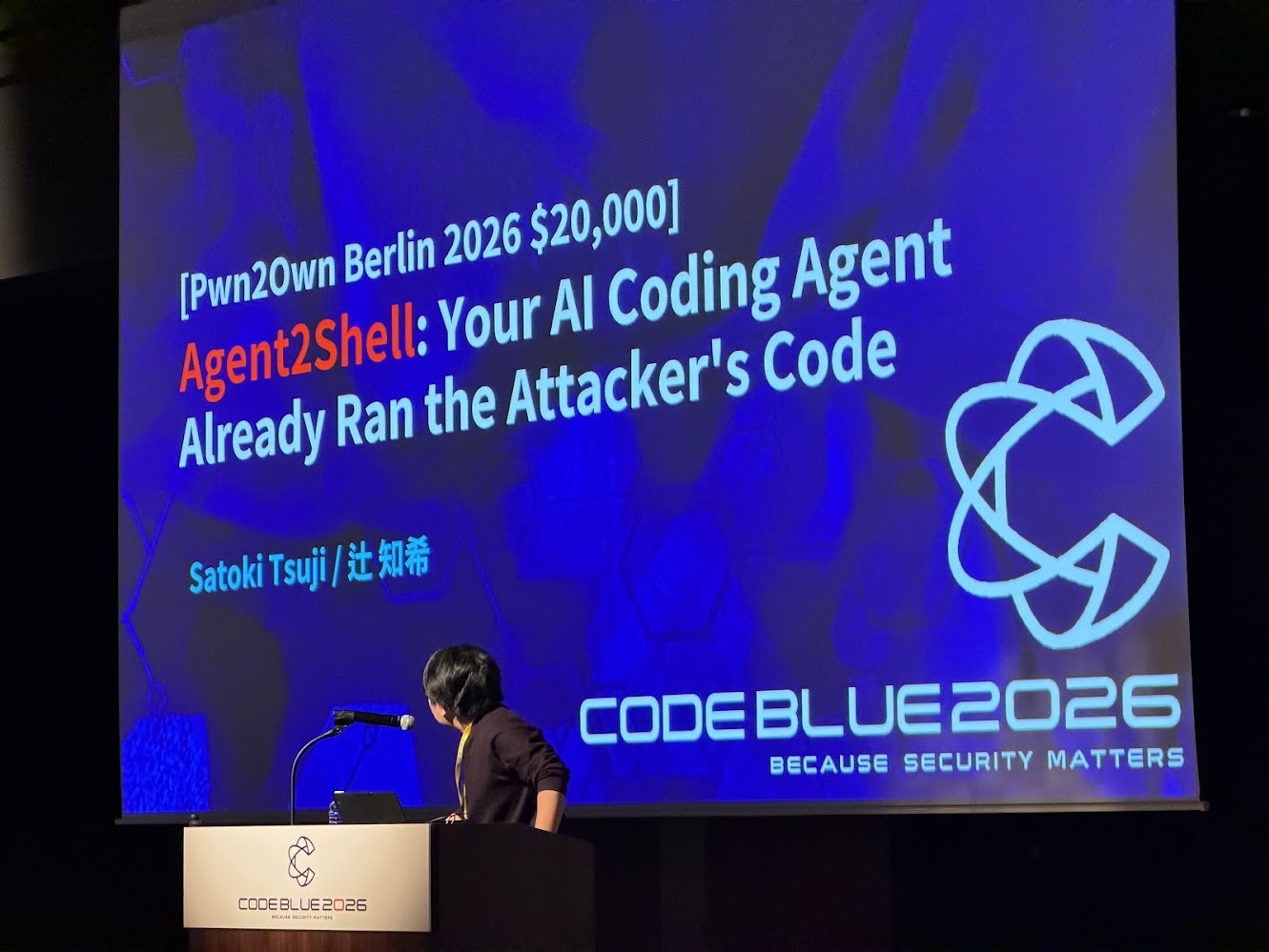
The session was titled [Pwn2Own Berlin 2026 $20,000] Agent2Shell: Your AI Coding Agent Already Ran the Attacker’s Code. It examined concrete attack paths in OpenAI Codex, Cursor, Anthropic Claude Code, Google Gemini, and other AI coding agents that can cause attacker-controlled code to run before the user enters a prompt.
We are publishing the presentation deck in PDF and PPTX formats.
Pre-Prompt RCE: The Attack Finishes Before a Prompt Is Processed
AI coding agents read files and configuration from a workspace and operate real tools such as the shell, filesystem, and Git. The same capabilities that make them useful also create a new attack surface.
Immediately after opening a folder, an AI agent may run Git commands to display the current branch and file changes while also loading agent-specific settings. An attacker can place configuration such as .git/config, .vscode/tasks.json, or .claude/settings.json in a repository or ZIP archive and use that automatic processing to launch a command. If it happens before the trust check, code runs before the user enters a prompt. The talk groups this class of attacks under the name Pre-Prompt RCE.
Prompt-injection defenses such as guardrails, along with AI input/output monitoring, focus on behavior after the model begins operating. They cannot stop an attack that completes before model execution. Security therefore depends on whether controls such as Workspace Trust, execution approval, and sandboxing are applied before any workspace-controlled processing occurs.
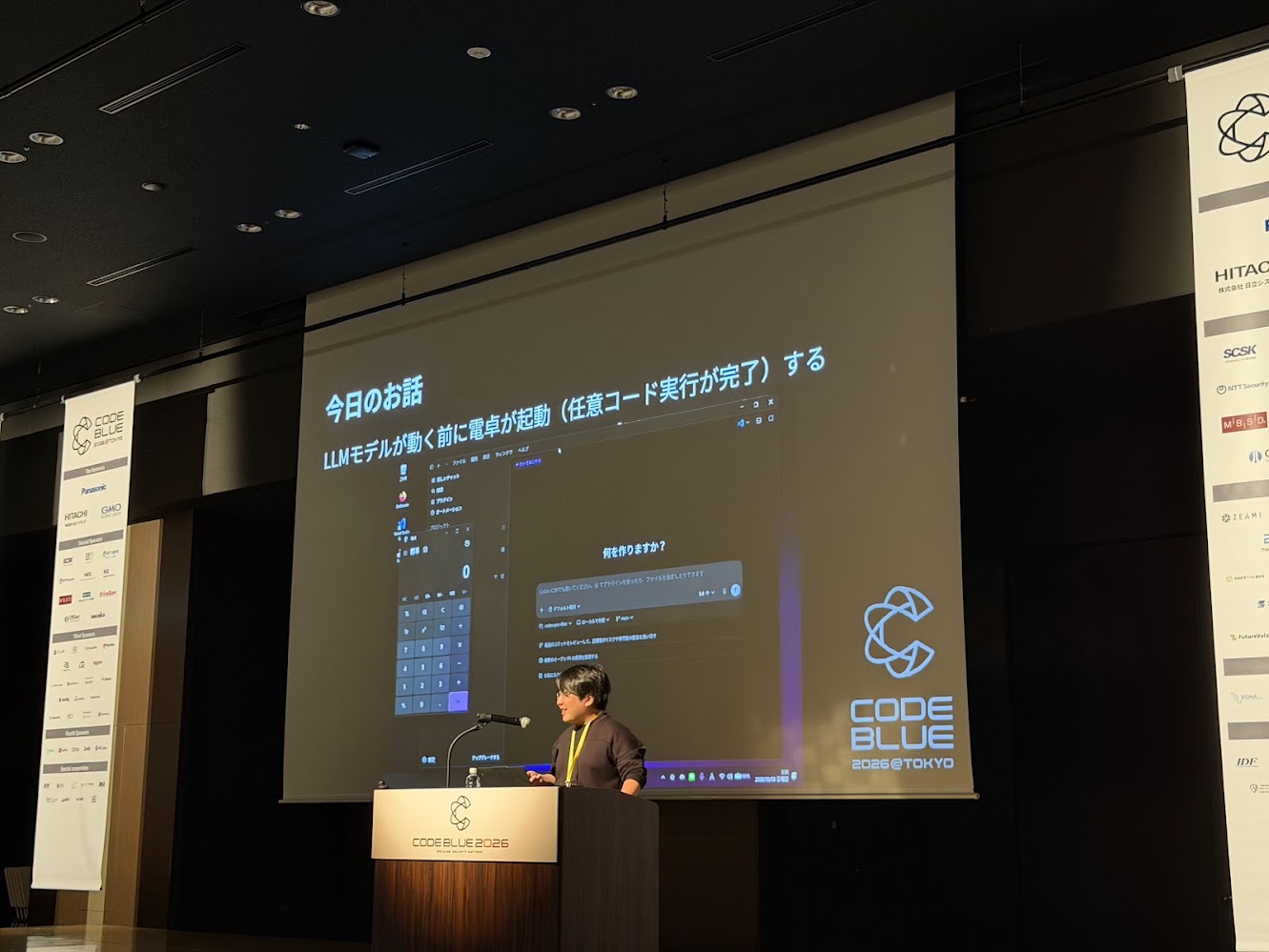
The session also showed how AI agents can support vulnerability assessment by analyzing real binaries, generating PoCs, launching the target, monitoring processes, and documenting the result.
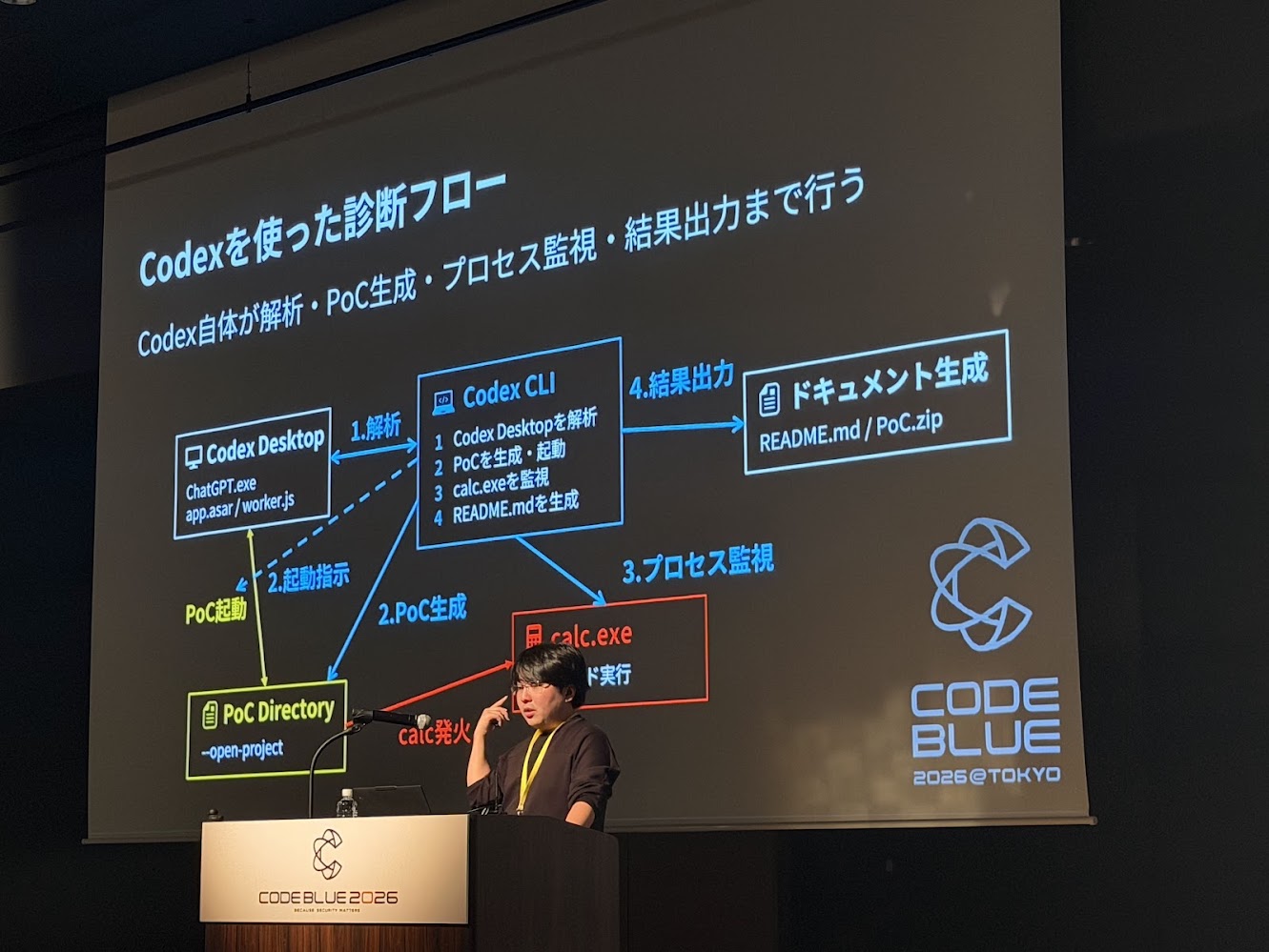
Presentation Slides
The materials are available for download below. The PPTX version includes the demonstration videos used during the session.
- Download the PDF version (approximately 12 MB)
- Download the PowerPoint version (approximately 173 MB)
If the embedded PDF does not appear in your browser, use the PDF download link above.
Using AI Agents Safely
Because simply opening untrusted code can expose an AI agent to attack, prompt-level defenses alone are not enough: AI agents should run with least privilege inside isolated environments.
This risk is not limited to organizations using AI agents. AI penetration-testing tools also read code and configuration from their targets, which means a malicious target may be able to attack the tool performing the assessment.
Ikotas Labs provides vulnerability research, pre-deployment security assessments, and attacker-led penetration testing for AI agents and LLM applications. Our research also examines the safety of environments in which AI reads and executes code, including the possibility of “hack back” attacks against AI penetration-testing tools.
Please contact us to discuss your security needs.